


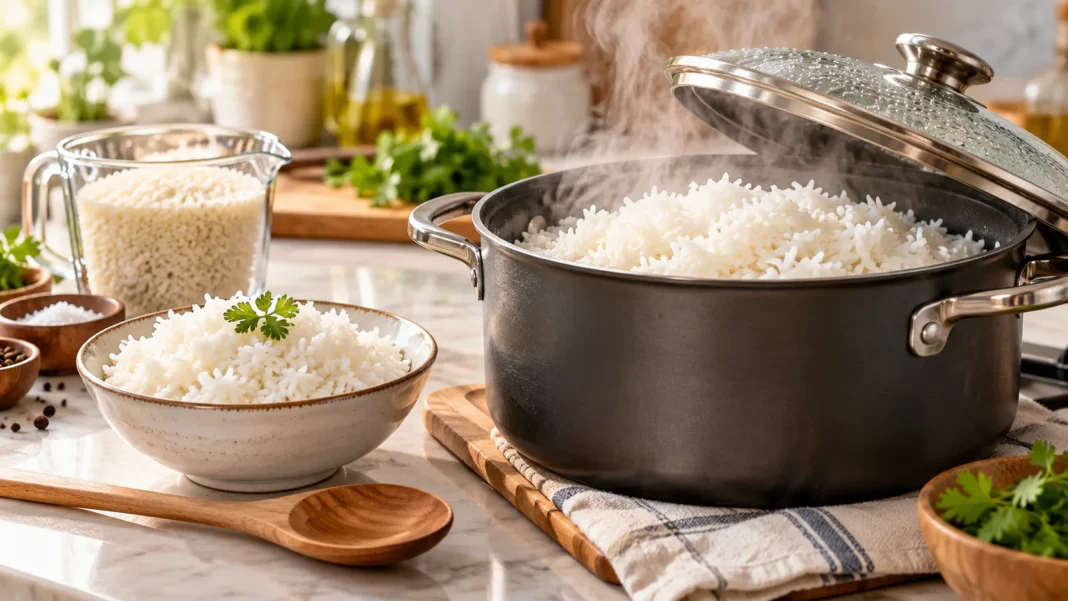
Cooking rice may seem like one of the simplest kitchen tasks, but achieving perfectly fluffy, tender, and separate grains can be surprisingly challenging. Sometimes rice becomes sticky, mushy, undercooked, or burned at the bottom of the pot. Fortunately, learning a few basic cooking techniques can make a noticeable difference in your results.
If you want to know how to cook rice perfectly, the secret involves selecting the right rice variety, measuring water accurately, controlling heat, and allowing enough resting time. Different types of rice require slightly different methods, but the essential principles remain easy to understand. With a little practice, anyone can prepare delicious rice at home.
Whether you are cooking white rice for dinner, preparing basmati rice for a flavorful meal, or making brown rice for a nutritious side dish, this guide explains everything you need to know. From washing and soaking to simmering and fluffing, you will discover practical techniques for consistently cooking rice.
Understanding the Different Types of Rice
Rice comes in several varieties, and each type has unique characteristics that influence its cooking method. Long-grain rice, including basmati and jasmine, generally produces lighter grains that separate easily when cooked properly. Medium-grain and short-grain varieties contain different proportions of starch, giving them a softer or stickier texture after cooking.
Basmati rice is especially popular in South Asian and Middle Eastern cooking because of its delicate aroma and elongated grains. Jasmine rice is commonly used in Southeast Asian dishes and has a naturally soft, slightly clingy texture. Short-grain rice is often preferred for Japanese meals and recipes that require grains to hold together.
Brown rice differs from white rice because it retains its bran and germ layers. These outer layers contribute fiber, nutrients, and a slightly chewy texture but also require more cooking time. Understanding these differences helps you select appropriate water quantities, cooking temperatures, and preparation methods for the rice you want to serve.
Choosing the Right Rice for Your Recipe
Selecting the right variety is an important first step when learning how to cook rice perfectly. Different dishes require different textures, and using an unsuitable variety can affect the final result. For example, fluffy basmati rice works beautifully with curries, while short-grain rice is better suited to dishes requiring a tender, cohesive texture.
For everyday meals, long-grain white rice is a versatile option because it cooks relatively quickly and pairs with numerous ingredients. Jasmine rice complements stir-fries, vegetables, and Asian-inspired dishes, while brown rice offers a nuttier flavor. Choosing rice based on your preferred taste and texture makes the cooking process more predictable.
Rice quality and storage conditions can also influence cooking results. Older or improperly stored rice may behave differently when absorbing water, while broken grains can release additional starch. Store uncooked rice in a sealed container in a cool, dry location, and inspect it before cooking to maintain freshness and consistent quality.
Measuring the Correct Rice-to-Water Ratio
Using the correct water quantity is one of the most important factors in preparing perfectly cooked rice. Too much water can produce soft, sticky, or mushy grains, while too little may leave the rice firm and undercooked. The ideal rice-to-water ratio depends on the variety, whether the rice has been soaked, and the cooking method.
For many types of regular long-grain white rice, approximately one cup of rice to one and three-quarters cups of water is a useful starting point. White basmati often needs less water, especially when soaked, while brown rice generally requires more. Always consider the instructions provided on the rice packaging because processing and grain characteristics can vary.
Accurate measuring helps create repeatable results, particularly when cooking the same rice variety regularly. Use the same measuring cup for both rice and water to maintain consistent proportions. A tightly covered saucepan also helps control moisture loss, meaning the amount of water needed may differ from recipes using uncovered or loosely covered cookware.
Why Washing Rice Before Cooking Matters
Washing rice before cooking can help remove loose surface starch, dust, and small particles that may be present on the grains. Excess surface starch can contribute to an unwanted sticky texture, particularly when preparing long-grain white rice. Rinsing is therefore a useful preparation step when your goal is fluffy rice with clearly separated grains.
To wash rice, place the measured grains in a bowl and cover them with cool water. Gently move the rice with your fingers, then carefully drain the cloudy water. Repeat the process several times until the water becomes noticeably clearer, although it does not need to become completely transparent.
Not every rice recipe requires washing because some dishes benefit from retaining surface starch. Certain enriched rice products may also lose added nutrients when rinsed, so checking package instructions is worthwhile. For everyday basmati or jasmine rice, however, rinsing is commonly recommended to help achieve the desired texture.
Should You Soak Rice Before Cooking?
Soaking rice before cooking allows the grains to absorb some moisture in advance. This process can shorten cooking time and encourage more even hydration, especially for long-grain varieties such as basmati. Although soaking is not essential for every type of rice, it can be helpful when preparing dishes that require light, elongated grains.
For basmati rice, soaking the rinsed grains in clean water for approximately twenty to thirty minutes is a common approach. After soaking, drain the rice thoroughly before adding the measured cooking water. Because the grains have already absorbed moisture, soaked rice may require slightly less water than rice cooked directly from dry.
Quick-cooking white rice generally does not require soaking, while brown rice can be soaked if desired. The benefits depend on grain type and the cooking technique being used. Following a consistent method is particularly helpful because changing soaking time without adjusting water quantities can lead to unpredictable cooking results.
How to Cook White Rice Perfectly on the Stove
Cooking white rice on the stove is a straightforward method that requires only a saucepan, water, rice, and a suitable lid. Begin by measuring one cup of regular long-grain white rice and rinsing it if recommended. Add the drained rice and approximately one and three-quarters cups of water to a medium saucepan with a small pinch of salt.
Bring the water to a gentle boil over medium-high heat, then stir briefly to distribute the grains evenly. Reduce the heat to its lowest setting and cover the saucepan tightly. Allow the rice to simmer for approximately fifteen to eighteen minutes without repeatedly lifting the lid, adjusting the time according to the rice variety.
Once the water has been absorbed and the rice is tender, remove the saucepan from the heat. Keep the lid in place for another ten minutes so the trapped steam can finish distributing moisture throughout the grains. Finally, gently fluff the rice with a fork and serve it while warm.
How to Cook Basmati Rice for Fluffy, Separate Grains
Basmati rice is valued for its delicate fragrance, slender grains, and light texture. Preparing it properly helps preserve these qualities while preventing the grains from becoming overly soft. Start by rinsing one cup of basmati rice several times and soaking it for approximately twenty to thirty minutes before draining completely.
Add the drained rice to a saucepan with approximately one and one-quarter to one and one-half cups of water, depending on the rice and soaking conditions. Bring the water to a boil, then reduce the heat and cover tightly. Cook gently for around ten to fifteen minutes, checking the package guidance for the most appropriate timing.
When the water has been absorbed, turn off the heat and leave the rice covered for ten minutes. This resting period helps the grains firm slightly and separate more easily. Use a fork to fluff the rice carefully, avoiding vigorous stirring that could break the delicate grains and produce an uneven texture.
How to Cook Brown Rice Without Making It Hard
Brown rice has a firmer texture and longer cooking time than ordinary white rice because its bran layer remains intact. This outer layer slows water absorption, meaning brown rice requires additional moisture and patience. When prepared correctly, it develops a pleasantly chewy texture and a mild, nutty flavor that complements many dishes.
For the covered absorption method, combine one cup of brown rice with approximately two to two and one-quarter cups of water. Bring the mixture to a boil, reduce the heat, and cover the saucepan. Simmer gently for around forty to fifty minutes, or follow the specific instructions for your rice variety.
After cooking, remove the saucepan from the heat and allow the rice to rest with the lid on for ten minutes. If the grains remain too firm and the saucepan is dry, add a small amount of hot water and continue cooking briefly. The finished rice should be tender while retaining a slightly chewy consistency.
How to Cook Jasmine Rice Perfectly
Jasmine rice is a fragrant long-grain variety commonly used in Thai and other Southeast Asian cuisines. It has a naturally tender texture and tends to cling together more than basmati rice. Because of these characteristics, jasmine rice often requires less cooking water than regular long-grain white rice when prepared using the absorption method.
Begin by rinsing one cup of jasmine rice gently to remove excess surface starch. Place the drained rice in a saucepan with approximately one and one-quarter cups of water, or use the amount recommended on the package. Bring the mixture to a boil before lowering the heat and covering the saucepan tightly.
Allow the rice to simmer gently for around twelve to fifteen minutes without stirring. Once the water has been absorbed, remove the saucepan from the heat and leave it covered for another ten minutes. Fluff gently with a fork, remembering that jasmine rice naturally has a softer, slightly more cohesive texture.
How to Cook Rice in a Rice Cooker
A rice cooker is a convenient kitchen appliance that simplifies the process of preparing consistently cooked rice. Most models automatically manage heating and switch to a warming function when cooking finishes. This makes them particularly useful for busy households, beginners, and anyone who prepares rice frequently throughout the week.
Start by measuring and rinsing the rice according to the variety and manufacturer recommendations. Place the grains inside the rice cooker and add water using the appropriate measurement markings or supplied instructions. Close the lid, select the correct cooking setting, and allow the appliance to complete its programmed cycle.
Once the cooking cycle finishes, let the rice rest briefly before opening the lid and fluffing the grains. Avoid leaving cooked rice at room temperature for extended periods because improper storage can encourage bacterial growth. If the rice cooker has a warming function, follow its instructions for safe holding temperatures and storage.
How to Cook Rice Without It Sticking to the Pot
Rice sticking to the bottom of the pot is a common problem, especially when cooking with excessive heat or insufficient water. A thick-bottomed saucepan helps distribute heat more evenly and reduces the likelihood of localized burning. Using the correct water ratio and a properly fitting lid also supports consistent cooking.
Once the rice begins simmering, reduce the heat sufficiently to prevent the water from evaporating too quickly. Avoid stirring repeatedly because this can release additional starch and increase the chances of sticking. Keeping the lid closed also helps retain moisture, allowing the grains to cook gently without unnecessary disturbance.
Some cooks add a small amount of oil or butter to improve flavor and help reduce sticking. However, using fat is optional and cannot compensate for unsuitable heat or water measurements. If sticking continues, experiment with a heavier saucepan, slightly lower cooking temperature, or a small adjustment to the water quantity.
Common Mistakes That Ruin Perfectly Cooked Rice
One of the most frequent mistakes is adding too much water without considering the rice variety. Excess moisture can produce mushy grains, while insufficient water may leave the center undercooked. Accurate measuring and following variety-specific guidance help prevent these problems and create more predictable results in everyday cooking.
Another common error is lifting the lid repeatedly during the simmering stage. Every time the lid is removed, heat and steam escape, potentially interrupting the cooking process. Stirring frequently can also damage delicate grains and release additional starch, particularly when preparing basmati or other rice intended to remain separate.
Skipping the resting stage is another mistake that can affect the finished texture. Freshly cooked rice may contain unevenly distributed moisture, and immediate stirring can cause softer grains to break apart. Allowing the covered pot to stand for several minutes helps the rice finish steaming and creates a more consistent result.
How to Fix Rice That Is Too Wet or Mushy
Overly wet rice often results from excessive water, insufficient evaporation, or cooking for too long. If the grains are tender but a small amount of liquid remains, remove the lid and allow the excess moisture to evaporate over very low heat. Watch carefully to prevent the rice from drying out or sticking.
If the rice is slightly too moist, spreading it gently on a wide plate or shallow dish may help release steam. Avoid aggressive stirring because soft grains are more likely to break apart. However, rice that has become completely mushy cannot usually be restored to a fluffy texture simply by removing additional moisture.
Instead of discarding excessively soft rice, consider using it in dishes where a tender consistency is desirable. Rice porridge, soup, and certain rice-based desserts can provide practical alternatives. The most reliable solution for future batches is adjusting the water ratio and cooking time to match the specific rice variety.
How to Fix Rice That Is Undercooked
Undercooked rice usually feels hard or firm in the center because the grains have not absorbed enough moisture. This problem can occur when insufficient water is added or the cooking temperature is too high. Fortunately, slightly undercooked rice can often be corrected without starting the entire preparation process again.
If the saucepan is dry but the rice remains firm, sprinkle a few tablespoons of hot water evenly over the grains. Cover the pot and continue cooking over very low heat for approximately five minutes. Check whether the rice has softened, adding a little more moisture only if necessary.
After additional cooking, allow the rice to rest briefly before fluffing and serving. Avoid pouring large quantities of water into the saucepan because doing so may produce unevenly cooked or overly soft grains. Small adjustments and gentle heat are usually more effective for improving the texture of undercooked rice.
How to Store and Reheat Cooked Rice Safely
Cooked rice requires careful handling because certain bacteria can survive the cooking process and multiply when rice is stored improperly. Leaving cooked rice at room temperature for extended periods increases food safety risks. To reduce these risks, cool leftover rice promptly and refrigerate it within one hour when practical.
Transfer leftover rice into shallow, covered containers so it cools more quickly. Store it in a refrigerator maintained at approximately 4°C or below, and use refrigerated leftovers within three to four days. For additional convenience, cooked rice can also be frozen in suitable airtight containers and reheated when needed.
When reheating rice, make sure it becomes steaming hot throughout, reaching approximately 74°C for safe leftover reheating. Add a small splash of water if necessary to restore moisture. Avoid repeatedly cooling and reheating the same portion, and discard rice that has been left unrefrigerated for an unsafe period.
Best Tips for Making Rice Taste Better
Perfectly cooked rice should have the right texture, but small additions can also improve its flavor. Replacing some or all of the cooking water with suitable vegetable or chicken stock can create a richer taste. A modest amount of salt, butter, or olive oil may also complement the natural flavor of different rice varieties.
Aromatic ingredients provide another simple way to make everyday rice more interesting. Bay leaves, cinnamon sticks, cardamom pods, or garlic can be added during cooking, depending on the dish being prepared. These ingredients release gentle flavors into the cooking liquid and can transform plain rice into a more fragrant side dish.
Fresh herbs and vegetables can also enhance finished rice without requiring complicated cooking techniques. Chopped parsley, cilantro, lightly cooked peas, or a squeeze of lemon may add freshness and variety. Choosing ingredients that complement the main meal helps create balanced flavors while allowing the rice’s natural texture to remain appealing.
Conclusion
Learning how to cook rice perfectly becomes much easier when you understand the importance of selecting the right variety, measuring water accurately, and controlling cooking temperatures. Whether preparing white rice, basmati, jasmine, or brown rice, each type requires slightly different treatment. Following a consistent method can help you achieve tender, flavorful grains without unnecessary complications.
The most important techniques include rinsing when appropriate, maintaining gentle heat, keeping the saucepan covered, and allowing cooked rice to rest before fluffing. Small adjustments can make a noticeable difference, especially when working with different cookware or rice varieties. With practice, you can recognize the texture and moisture level that produce your preferred results.
Perfect rice does not require complicated equipment or professional cooking experience. A suitable saucepan, accurate measurements, and a little patience are often all you need to prepare a delicious meal. By applying these simple techniques, you can make rice a reliable and enjoyable part of your everyday cooking routine.
Frequently Asked Questions (FAQs)
1. What is the secret to cooking rice perfectly?
The secret is using the correct rice-to-water ratio, maintaining low heat, and allowing the rice to rest after cooking. Avoid frequent stirring and lifting the lid because these actions can affect texture and moisture.
2. How much water do I need for one cup of rice?
Many regular long-grain white rice varieties need approximately one and three-quarters cups of water per cup of rice. However, basmati, jasmine, and brown rice have different requirements, so follow variety-specific instructions.
3. How long does it take to cook white rice?
Most regular long-grain white rice takes approximately fifteen to eighteen minutes to cook on the stove, followed by ten minutes of resting. Actual cooking time depends on the rice variety, heat, and water quantity.
4. Should I rinse rice before cooking?
Rinsing helps remove loose surface starch and can produce fluffier, more separate grains. However, some enriched rice products and recipes do not require washing, so checking the package instructions is recommended.
5. Why does my rice become sticky or mushy?
Rice commonly becomes sticky or mushy because of excessive water, overcooking, or repeated stirring. Using accurate measurements, appropriate heat, and a suitable cooking method can help improve its texture.