


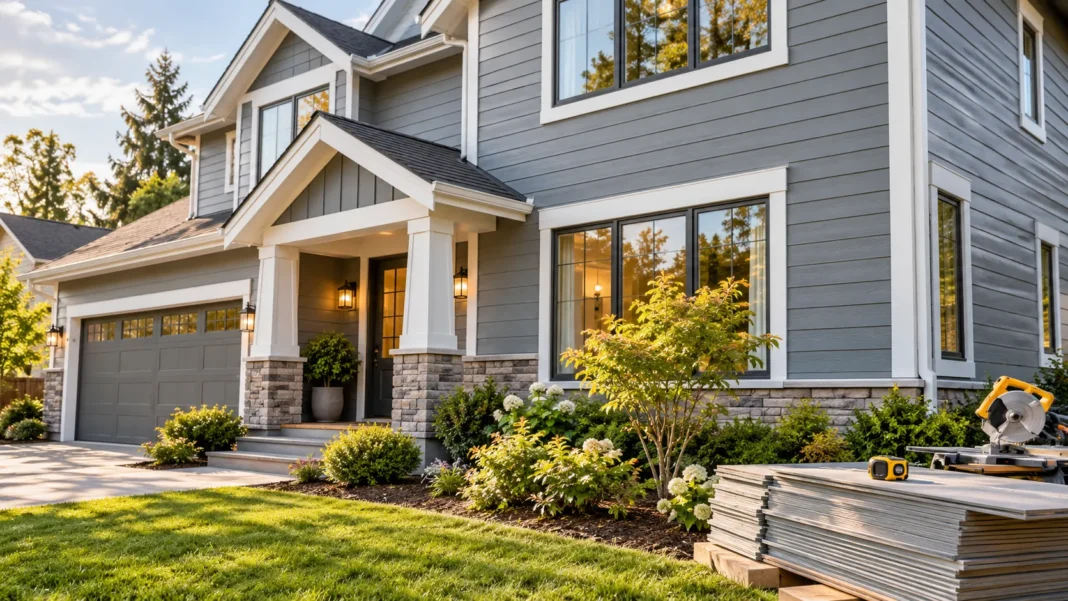
Fiber cement siding has become a popular choice for homeowners who want an attractive, durable, and relatively low-maintenance exterior. Made from a combination of cement, sand, cellulose fibers, and water, this siding material offers the appearance of traditional wood without many of its common maintenance requirements. It is available in different colors, textures, and styles that complement both modern and traditional homes.
However, choosing exterior siding involves more than appearance alone. Installation costs, climate suitability, maintenance requirements, and long-term durability all influence whether fiber cement is the right investment. Understanding fiber cement siding pros, cons, and costs can help you compare available materials and plan a realistic renovation budget. This guide covers its benefits, drawbacks, popular designs, installation considerations, and expected expenses in 2026.
What Is Fiber Cement Siding and How Does It Work?
Fiber cement siding is an exterior cladding material manufactured from a mixture of Portland cement, sand or other mineral fillers, cellulose fibers, and water. These ingredients are processed into strong boards, panels, or shingles designed to protect a building’s exterior walls. The finished products can resemble natural wood, smooth contemporary panels, or traditional siding profiles.
The cement-based composition gives fiber cement its characteristic strength, while reinforcing fibers contribute to the material’s stability. Manufacturers produce different thicknesses, textures, and finishes for residential and commercial applications. Some products arrive with factory-applied colors, while others require painting after installation to achieve the desired appearance and weather protection.
Fiber cement siding forms part of a complete exterior wall system rather than functioning as the only barrier against moisture. Proper installation includes appropriate flashing, drainage details, and a weather-resistant barrier behind the cladding. When these components work together, the siding helps protect the structure while providing an attractive finished exterior.
Different Types and Styles of Fiber Cement Siding
Fiber cement lap siding is one of the most common styles used on residential properties. It consists of long horizontal boards installed with overlapping edges, creating a familiar appearance associated with traditional wooden clapboard siding. Homeowners can choose smooth or woodgrain textures depending on whether they prefer a contemporary or classic exterior design.
Fiber cement shingles offer another option, particularly for homes inspired by coastal, cottage, or traditional architectural styles. These products imitate the appearance of wooden shakes while providing the material characteristics of cement-based cladding. They can cover entire walls or serve as decorative accents on upper stories, dormers, and gable ends.
Large fiber cement panels are often selected for modern homes featuring clean lines and simple geometric designs. They can also be arranged with vertical battens to create a board-and-batten appearance. Each style has different installation requirements, material costs, and visual characteristics, so selecting the appropriate design depends on the building’s architecture and available budget.
Advantages of Fiber Cement Siding for Homeowners
Durability is one of the main reasons homeowners choose fiber cement siding for exterior renovations. Properly manufactured and installed products resist several common problems associated with traditional wood, including termite damage and decay. Their cement-based construction can also provide good resistance to weather exposure when supported by correct installation and ongoing maintenance.
Fire resistance is another important advantage because fiber cement is a noncombustible cladding material when classified and installed under applicable standards. This characteristic can be valuable in areas where building materials must meet specific fire performance requirements. However, siding alone cannot make a house fireproof, since overall protection depends on the complete building assembly.
Fiber cement also offers considerable design flexibility through different profiles, textures, and colors. Homeowners can achieve the appearance of painted wood, traditional shingles, or contemporary panels without choosing natural timber. The combination of visual appeal and relatively modest maintenance requirements makes it attractive for homeowners planning long-term exterior improvements.
Disadvantages of Fiber Cement Siding to Consider
Despite its advantages, fiber cement siding has several drawbacks that homeowners should evaluate before purchasing. One important concern is its weight, which makes handling and installation more demanding than with many lightweight siding materials. Large boards may require multiple workers, appropriate lifting arrangements, and additional care to prevent damage during transportation and installation.
Fiber cement can also crack or chip when mishandled, improperly fastened, or exposed to excessive movement. Although the material is durable under normal conditions, it is not completely resistant to physical damage. Poor installation can contribute to moisture problems around joints and penetrations, potentially affecting both the cladding and underlying wall structure.
Another disadvantage is the higher initial installation cost compared with some vinyl siding products. Fiber cement may also require repainting, periodic cleaning, and maintenance of specified joints or sealants. Homeowners seeking the lowest upfront price or a completely maintenance-free exterior should compare these limitations carefully before making a final decision.
How Much Does Fiber Cement Siding Cost in 2026?
Fiber cement siding installation costs in the United States commonly range from approximately $6 to $18 per square foot, depending on the product, location, and project complexity. Many straightforward installations fall within a narrower range, but premium materials and difficult layouts can increase expenses. These estimates include materials and installation labor rather than every possible renovation-related expense.
For example, a home requiring 1,500 square feet of siding coverage could have an estimated installation cost between $9,000 and $27,000. A larger project covering 2,000 square feet could range from approximately $12,000 to $36,000. These examples are budgeting illustrations, not guaranteed quotations, and the actual siding area differs from a home’s interior floor space.
Additional expenses may include removing existing siding, repairing damaged sheathing, installing moisture barriers, replacing trim, and obtaining permits. Factory-finished products may also have different prices from siding that requires painting after installation. Requesting detailed local estimates is the most reliable way to understand the full cost of a particular fiber cement siding project.
What Factors Affect Fiber Cement Siding Prices?
The size and shape of a house significantly influence the overall cost of fiber cement siding installation. Larger exterior walls require more material, while complicated rooflines, dormers, and numerous windows increase cutting and labor requirements. Multi-story buildings may also require additional access equipment and safety arrangements that contribute to higher installation expenses.
Material selection is another important factor because lap boards, decorative shingles, and large architectural panels often have different purchase prices. Factory-applied finishes, specialized textures, and premium colors can further influence the cost. Homeowners should compare complete product specifications rather than assuming that all fiber cement siding provides identical performance or appearance.
Regional labor rates and the condition of the existing exterior walls can also affect renovation expenses. Removing deteriorated cladding or addressing hidden moisture damage may add work that was not obvious during initial planning. A detailed contractor inspection helps identify potential complications and produces a more realistic estimate before installation begins.
Fiber Cement Siding vs. Vinyl Siding
Fiber cement and vinyl siding are both popular exterior cladding choices, but they differ in material composition, appearance, and cost. Vinyl is generally lighter and often less expensive to install, making it attractive for budget-conscious renovations. Fiber cement usually provides a more substantial appearance and is available in textures that closely resemble painted wood.
Both materials can perform well when properly selected and installed, although their responses to environmental conditions differ. Vinyl may expand and contract noticeably with temperature changes, while fiber cement is relatively dimensionally stable. Fiber cement also offers noncombustible material characteristics, whereas conventional vinyl is combustible and can soften or distort under high heat.
Maintenance expectations deserve consideration because vinyl typically does not require routine repainting, while painted fiber cement may eventually need a fresh coating. Both materials still require cleaning and inspections for damage. The better choice depends on upfront budget, design preferences, local climate, and the performance requirements of the building.
Fiber Cement Siding vs. Natural Wood Siding
Natural wood siding is valued for its warmth, distinctive grain, and traditional architectural appearance. However, exterior wood requires ongoing protection against moisture, insects, and deterioration. Fiber cement provides an alternative for homeowners who appreciate wood-inspired textures but prefer a cement-based product with different maintenance and durability characteristics.
Wood can be repaired, refinished, or replaced using familiar carpentry techniques, although its long-term performance depends heavily on maintenance and weather exposure. Fiber cement resists rot and termite damage but may crack when improperly handled or installed. Both materials require suitable flashing and moisture management to protect the underlying structure.
Cost comparisons depend on the wood species, fiber cement product, installation method, and local labor market. Premium cedar or specialty wood cladding can be expensive, while some ordinary wood products cost less initially. Homeowners should evaluate maintenance expenses and expected service life alongside the original purchase price rather than comparing materials solely by installation cost.
How Fiber Cement Siding Performs in Different Climates
Fiber cement siding can be suitable for many climates, including regions experiencing rain, humidity, seasonal temperature changes, and strong sunlight. Its resistance to rot and insects makes it appealing where traditional wood may require substantial maintenance. However, proper moisture management remains essential because water can still affect coatings, joints, and underlying building materials.
In colder regions, siding systems must accommodate freezing temperatures, snow, and repeated freeze-thaw cycles. Products should be selected according to their approved environmental exposure and installation specifications. Poorly sealed edges, damaged finishes, or improper clearances can contribute to deterioration regardless of the material’s general weather resistance.
Hot climates introduce different considerations, including intense sunlight, thermal movement, and the importance of exterior color selection. Factory finishes may provide consistent appearance and weathering characteristics when properly maintained. Choosing climate-appropriate products and following manufacturer requirements helps homeowners achieve more dependable long-term performance across different environmental conditions.
Fiber Cement Siding Installation and Safety Considerations
Proper installation is essential for ensuring that fiber cement siding performs as intended. Professional installers must consider the supporting wall, moisture barrier, flashing, fastener placement, and required clearances. Small mistakes around windows, doors, roof intersections, or ground-level areas can create pathways for water intrusion and reduce the effectiveness of the finished exterior.
Cutting fiber cement products can generate respirable crystalline silica dust, which presents serious health risks when inhaled. Professional installation requires suitable dust-control methods, compatible equipment, and protective measures that comply with workplace safety requirements. Because siding boards are also heavy and sometimes brittle, appropriate handling practices are important during transportation and positioning.
For most whole-house siding projects, hiring qualified installers is more practical than attempting the work without relevant construction experience. Ask contractors about manufacturer training, installation procedures, insurance, and previous fiber cement projects. A properly installed system should follow building codes and product specifications while preserving any applicable manufacturer warranty protections.
How Long Does Fiber Cement Siding Last?
Fiber cement siding is often chosen for its potential to provide several decades of service when correctly installed and maintained. Many products are designed for long-term exterior use, and some manufacturers offer substantial limited warranties. However, expected lifespan depends on installation quality, exposure conditions, maintenance, and the specific product selected.
The protective finish may require attention well before the siding material reaches the end of its useful life. Factory-painted and field-painted products can have different maintenance intervals depending on weather exposure and coating quality. Regular inspections help identify fading, damaged paint, loose boards, or deteriorating joints before more extensive problems develop.
Homeowners should distinguish between product lifespan and warranty coverage because the two are not necessarily the same. Warranty terms may include limitations related to installation, maintenance, labor, or particular types of damage. Reviewing the complete warranty documentation helps establish realistic expectations about the siding’s long-term performance and potential repair responsibilities.
Maintenance Tips for Fiber Cement Siding
Fiber cement siding generally requires less intensive maintenance than many natural wood exteriors, but it still needs periodic care. Cleaning dirt, pollen, and surface residue helps maintain its appearance and makes damage easier to identify. A soft brush, mild cleaning solution, and gentle rinsing may be appropriate when permitted by the manufacturer.
Regular inspections should focus on damaged boards, peeling paint, and vulnerable areas around windows, doors, and roof intersections. Check that gutters and downspouts direct water away from the siding and that vegetation does not remain pressed against exterior walls. Addressing minor issues promptly can help prevent moisture-related deterioration and more costly repairs.
Repainting may eventually be necessary depending on the original finish, local climate, and level of weather exposure. Use coating systems recommended for the particular fiber cement product and follow preparation requirements carefully. Avoid aggressive pressure washing or cleaning methods that could damage protective finishes or force water behind the cladding.
Is Fiber Cement Siding Worth the Investment?
Fiber cement siding can be a worthwhile investment for homeowners who prioritize durability, attractive exterior finishes, and relatively manageable maintenance. Its ability to imitate traditional wood while resisting rot and termite damage makes it appealing for many renovation projects. However, the value depends on installation quality and whether the material suits the property’s needs.
The higher upfront cost may be easier to justify when homeowners plan to remain in the property for many years. Long-term considerations include future painting, cleaning, repairs, and expected service life. Potential improvements in curb appeal can also matter, although increased property value is never guaranteed by a siding replacement alone.
Before committing to fiber cement siding, compare contractor quotations and examine alternative materials with similar performance goals. Consider climate, architectural style, budget, and future maintenance responsibilities. A balanced evaluation of both advantages and disadvantages will help determine whether fiber cement offers the best overall value for your home.
Conclusion
Fiber cement siding offers an attractive combination of durability, fire resistance, design flexibility, and relatively modest maintenance requirements. Its wood-inspired appearance and resistance to common problems such as rot and insect damage make it a popular alternative to traditional exterior materials. However, installation quality is essential for achieving dependable long-term performance.
The main disadvantages include higher initial costs, substantial material weight, potential cracking, and the need for appropriate maintenance. In 2026, many U.S. installations cost approximately $6 to $18 per square foot, although actual prices depend on the property and selected product. Comparing detailed estimates helps homeowners understand the complete investment before beginning renovation work.
Choosing the right siding requires balancing appearance, durability, installation requirements, and long-term ownership costs. Fiber cement can be a practical option for homeowners who want a durable exterior without the maintenance demands of natural wood. With suitable product selection, professional installation, and regular care, it can provide an attractive and reliable exterior finish for many years.
FAQs
What are the main advantages of fiber cement siding?
Fiber cement siding offers durability, resistance to rot and insects, noncombustible material characteristics, and various design options. It can resemble natural wood while generally requiring less intensive maintenance than traditional wooden siding.
What are the disadvantages of fiber cement siding?
The main disadvantages include higher installation costs than some alternatives, heavy boards, potential cracking, and periodic repainting requirements. Professional installation is often recommended because cutting and handling require appropriate equipment and safety precautions.
How much does fiber cement siding cost per square foot?
In the United States, fiber cement siding commonly costs around $6 to $18 per square foot installed. Prices vary depending on materials, siding style, labor rates, and installation complexity.
How long does fiber cement siding last?
Properly installed fiber cement siding can last several decades, with some products designed for 50 years or longer. Actual lifespan depends on climate, installation quality, maintenance, and the manufacturer’s specifications.
Is fiber cement siding better than vinyl siding?
Fiber cement offers a wood-like appearance, dimensional stability, and noncombustible material characteristics, while vinyl is generally lighter and more affordable. The better choice depends on budget, climate, maintenance preferences, and design priorities.